The Living Pantry: What Your Fridge Says About Your Fermenting Soul
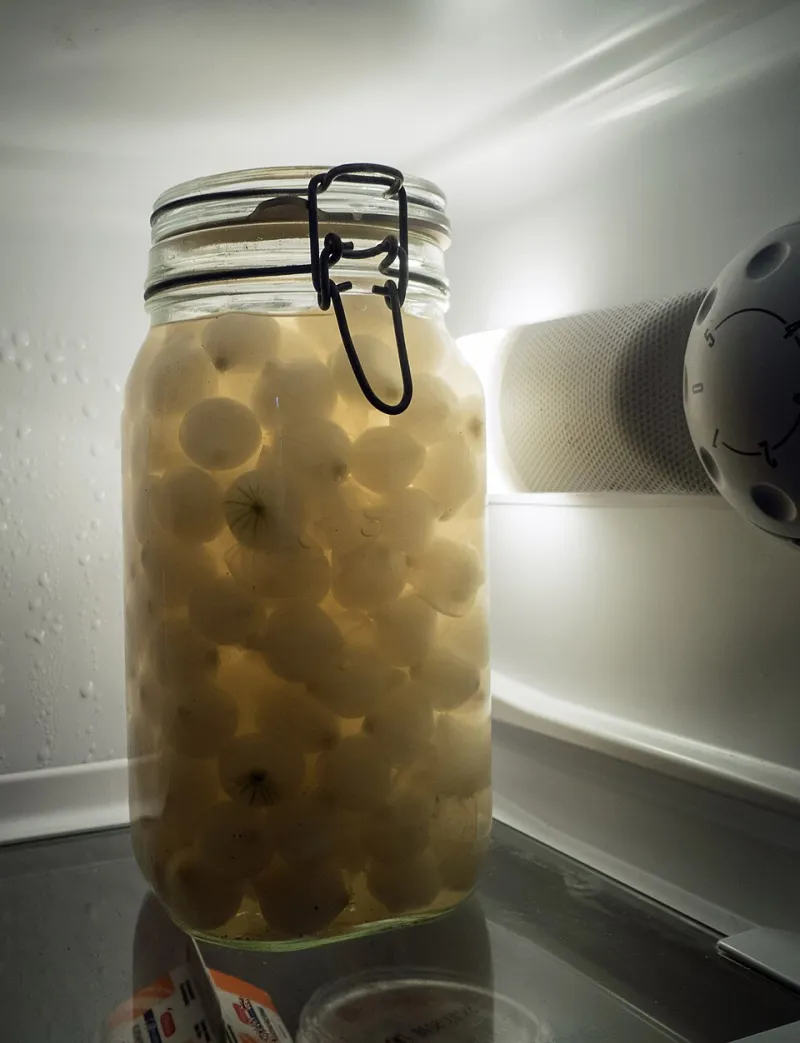
Photo: Kotivalo, CC BY-SA 4.0, via Wikimedia Commons
I opened my fridge last night and a jar of something I had labeled 'experiment — do not toss' stared back at me. It was not the first time. There is a shelf in my refrigerator that functions less like storage and more like a museum of good intentions. A half-used jar of kimchi. A container of brine I swore I would use for something. A small bottle of something dark and bubbly that might be vinegar, might be a science project, and might be both.
If you ferment at home, your fridge is not just an appliance. It is a mirror. It shows you who you are as a fermenter, not who you meant to be.
The Museum of Good Intentions
The top shelf is where optimism lives. That is where I put the jars I am sure I will check daily. The new kombucha starter. The miso I am aging. The hot sauce that needs tasting every three days. For the first week, I am diligent. I open the jar, I smell it, I take notes. By week three, the jar has become furniture. It is part of the landscape. I no longer see it, which is exactly when it starts to develop opinions.
A fridge full of forgotten jars is not a character flaw. It is a systems problem. Fermentation is a living process, and living things need attention. If your fridge is where projects go to disappear, the issue is not your dedication. It is your visibility. You cannot tend what you cannot see.
The Fuzzy Things We Do Not Talk About
Let us address the fuzzy elephant in the crisper drawer. Every fermenter has opened a jar and found something growing on top. Sometimes it is kahm yeast — that thin, white, slightly wrinkled film that is usually harmless. Sometimes it is mold, and sometimes it is a smell that makes you question your life choices. The shame around a failed batch is real, but it is also unhelpful. A fuzzy jar is information. It tells you about sanitation, salt levels, temperature, or simply time.
The healthiest fermenters I know are not the ones with perfect fridges. They are the ones who compost without drama. They open the jar, assess it, and move on. That is self-awareness in practice. The fridge is not a judgment chamber. It is a working pantry, and working pantries have turnover.
Shelf Discipline Is a Love Language
An orderly fermentation fridge is not about aesthetics. It is about access. When you can see your active cultures, you feed them. When you can see your finished ferments, you eat them. When you can see the jar you need to check, you check it.
A few small habits make a big difference. Keep active ferments on one shelf and finished ones on another. Use clear jars so you can see what is happening without opening the lid. Label with the date and the contents, even if the contents are 'peppers, maybe.' Keep a small tasting shelf for things that are ready now. And give yourself permission to downsize. A living pantry is not a museum. It is a kitchen.
A Five-Minute Fridge Audit
Once a week, do a quick audit. Pull out everything that is fermenting or fermented. Smell it. Look at it. Check the date. If it is ready, move it to the eating shelf. If it is questionable, make a decision: skim it, taste it, or compost it. Wipe down the shelf. Put the active projects back where you can see them. Five minutes, once a week, is enough to keep the living pantry alive.
The audit is not about being perfect. It is about staying in relationship with your ferments. A jar you have not looked at in a month is a jar you have stopped listening to.
The Living Pantry Mindset
Your fridge is a mirror, but it is also a tool. It can be a graveyard of forgotten experiments, or it can be a living pantry that feeds you, teaches you, and keeps you honest. The difference is not talent. It is attention.
So open the door. Look at the jars. Say hello to the ones you have been avoiding. Then make a little room, wipe the shelf, and start the next batch. The fridge will tell you the truth. It always does.