Meet the Home Fermenters Building Living Libraries One SCOBY at a Time
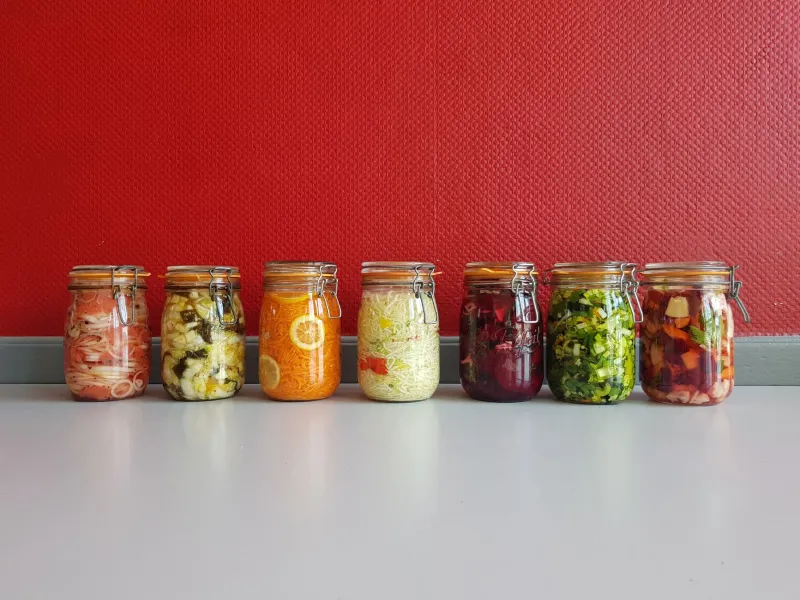
Somewhere in Portland, a mason jar the size of a small aquarium sits on a kitchen shelf, layered with rubbery, disc-shaped cultures floating in amber liquid. It's not a science experiment gone sideways — it's Marcy Tillman's SCOBY hotel, and she treats it with roughly the same devotion most people reserve for a houseplant they've had since college.
"I have SCOBYs in here that came from a woman in Vermont who's been fermenting kombucha for over twenty years," Marcy says, peering at the jar with something close to reverence. "That culture has a history. You don't just toss that."
Marcy isn't alone. All over the US, a growing wave of fermentation enthusiasts is doing something that goes well beyond brewing a weekly batch of kombucha or keeping a sourdough starter alive on the counter. They're building actual repositories — organized, catalogued collections of live cultures, starters, and microbial communities — and treating them as something worth protecting.
What Is a SCOBY Hotel, Anyway?
If you're new to the kombucha world, a SCOBY (Symbiotic Culture of Bacteria and Yeast) is the living mat that drives fermentation. Every batch you brew produces a new layer, and rather than throwing the extras away, many brewers store them in a "hotel" — essentially a jar of kombucha liquid packed with spare SCOBYs, kept fed and alive indefinitely.
But the concept has expanded well beyond kombucha. Home fermenters are now maintaining starter libraries for sourdough, water kefir grains, milk kefir grains, jun tea cultures, and even koji spores — the mold responsible for miso, sake, and soy sauce. Each of these is a living ecosystem, and dedicated hobbyists are treating them accordingly.
Think of it like seed saving, but for microbes. The same impulse that drives heirloom gardeners to protect rare tomato varieties is pushing fermentation enthusiasts to preserve cultures that might otherwise disappear.
The Science Behind Why It Matters
Here's the thing about live cultures: they're not interchangeable. A sourdough starter cultivated in San Francisco carries a microbial fingerprint shaped by local wild yeasts, flour types, water chemistry, and even the hands that feed it. A SCOBY that's been passed through a family for decades has adapted to specific conditions in ways that a commercially purchased culture simply hasn't.
Microbiologists have long understood that microbial diversity is ecologically important, but the conversation is only recently filtering down to home kitchens. Fermentation educator and food scientist Dana Cho, who runs workshops out of Chicago, puts it plainly: "When a unique culture dies, it's gone. There's no backup on a server somewhere. These are living things, and they carry information we don't fully understand yet."
That "information" includes unique strains of bacteria and yeast that may produce distinct flavor compounds, different levels of acidity, or novel probiotic properties. From a wellness perspective, diversity in the microbial cultures we consume may translate to diversity in our own gut microbiomes — a concept that's gaining serious traction in nutrition science.
The Community That Grew Around the Culture Swap
What makes this movement genuinely fascinating — and very 21st century — is how social it's become. Online communities on Reddit, Facebook groups, and dedicated Discord servers have turned culture swapping into a full-blown hobby ecosystem. People mail SCOBYs across state lines, trade sourdough starters at farmers markets, and post detailed "culture profiles" describing the origin story and flavor notes of their starters.
Jordan Reyes, a software developer in Austin who started fermenting during the pandemic, now maintains what he calls a "culture passport" — a notebook documenting the origin, age, feeding schedule, and tasting notes for each of his twelve active starters. "It sounds obsessive, I know," he laughs. "But once you taste the difference between a ten-year-old starter and something you bought off Amazon, you get it."
Some enthusiasts have gone further, creating informal lending libraries where community members can check out a starter, try it for a few months, and return a portion along with tasting notes. It's part fermentation club, part living archive.
Practical Tips for Starting Your Own Culture Collection
If this sounds appealing — or even just a little bit intriguing — starting a culture collection is more accessible than you might think. Here's how experienced home fermenters suggest getting started:
Start with one culture and learn it well. Whether it's a sourdough starter or a SCOBY, resist the urge to collect everything at once. Understanding one culture deeply — its rhythms, its quirks, its smell when it's happy — builds the intuition you'll need for everything else.
Source from the community, not just commercial suppliers. Sites like Cultures for Health are great for beginners, but reaching out to local fermentation groups or online communities for donated cultures means you're getting something with a story attached.
Label everything obsessively. Date, origin, feeding schedule, and any flavor notes you've observed. Future you will be grateful.
Keep a hotel as insurance. For any culture you care about, maintain a backup in a low-activity storage state — cool temperatures, less frequent feeding. This is your safety net if your active culture crashes.
Share generously. The ethos of this community runs on reciprocity. When your SCOBY hotel gets crowded, offer the extras to someone just starting out.
More Than a Hobby — A Philosophy
There's something quietly countercultural about all of this. In an era of instant everything, these fermenters are choosing slowness. They're opting into responsibility for living things, building relationships with microbes that span years or even decades, and finding meaning in the act of preservation.
For Marcy back in Portland, the SCOBY hotel has become a conversation starter, a community connector, and something she describes as genuinely grounding. "I work in tech. Everything I do disappears when I close my laptop," she says. "But this? This is alive. It was alive before me and it'll be alive after me if I take care of it. That feels like something real."
At FermenArts, we believe fermentation has always been about more than flavor — it's a practice that connects us to biology, to history, and to each other. The culture library movement is just the latest expression of that truth, and honestly, it might be one of the most beautiful ones yet.
So if you've got a SCOBY sitting in the back of your fridge that you've been meaning to toss — maybe don't. You might be sitting on something worth keeping.