Your Zip Code Is a Secret Ingredient: How Where You Live Shapes Every Ferment You Make
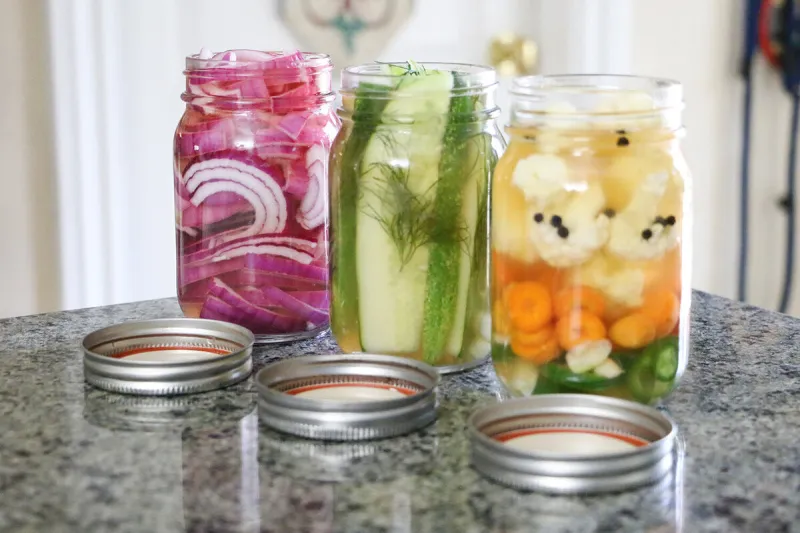
Photo: home fermentation jars vegetables kitchen countertop seasonal ingredients, via recipes.net
There's a moment most home fermenters know well. You follow a recipe to the letter — same salt percentage, same vegetables, same jar — and still end up with something completely different from what the cookbook promised. Maybe it's tangier than expected. Maybe it's moving faster than you planned. Maybe it smells a little... wild.
Here's the thing: you didn't do anything wrong. Your kitchen did something right.
Where you live isn't just a backdrop for your fermentation practice. It's an active participant. The humidity hanging in the air, the ambient temperature swinging between seasons, the invisible microbial community drifting through your open windows — all of it is showing up in your jar. Fermenters in wine country have long called this phenomenon terroir, that untranslatable French concept describing how place imprints itself on flavor. Your sauerkraut has terroir too. So does your kombucha, your miso, your hot sauce.
Let's talk about what that actually means for your kitchen — and how to work with it instead of against it.
The Humidity Factor: Why the South Ferments Differently
If you're fermenting in Florida, Louisiana, or coastal Georgia, you already know your kitchen has opinions. High ambient humidity means the air around your fermentation vessels is moisture-rich, which affects evaporation rates, salt concentration on exposed surfaces, and — critically — the microbial population available to colonize your brine.
In humid climates, ferments tend to move fast. Lactic acid bacteria thrive in warm, moist conditions, which means your kimchi might hit peak funk in three days instead of a week. That's not spoilage — that's your environment being enthusiastic. The upside is bold, complex flavor developing quickly. The challenge is keeping an eye on things so you don't overshoot your preferred sourness level.
Practical move for humid-climate fermenters: keep a close eye on your timeline during summer months and taste early. You might also consider bumping your salt percentage slightly — not enough to inhibit fermentation, but enough to give you a little more control over the pace.
The Dry West: Slower, Quieter, More Controlled
Head inland to Arizona, New Mexico, or the high desert of Colorado, and fermentation tells a different story. Low humidity slows things down and changes the evaporation dynamics around your jars. Ferments in dry climates often take longer to develop, and the microbial diversity in the ambient air can be different from what you'd find in a coastal kitchen.
This isn't a disadvantage — it's actually a gift if you like to be deliberate. Slower ferments give you more time to observe, taste, and intervene. Miso-style ferments, koji projects, and long-fermented hot sauces can be particularly rewarding in dry climates because the extended timeline allows for more nuanced flavor development without the risk of things racing out of control.
The main thing to watch: evaporation. In very dry conditions, the surface of open-air ferments can dry out faster, potentially creating conditions where unwanted molds find a foothold. Keep your vegetables submerged, use airlocks where appropriate, and consider placing a damp towel loosely near (not on) your fermentation space to add a little ambient moisture during particularly arid stretches.
Seasonal Swings: The Rhythm Your Ferments Already Know
Even within a single region, seasons completely change the fermentation equation. A sourdough starter that's lively and bubbly in July might seem sluggish and unresponsive come January — and that's not because your starter is broken. It's because temperature is the primary dial controlling microbial activity.
In general, warmer temperatures accelerate fermentation and favor more acidic, punchy outcomes. Cooler temperatures slow things down and often allow for more complex, layered flavors to develop. Traditional food cultures around the world figured this out long before food science had language for it — kimchi is made in late fall in Korea precisely because the cool temperatures allow for a slow, controlled ferment that develops depth without going sour too fast.
You can use this seasonal rhythm intentionally. Summer is a great time for quick-turnaround ferments: lacto-fermented pickles, water kefir, fast hot sauces. Fall and winter are ideal for longer projects — miso paste, fermented grain porridges, slow-developing vinegars. Spring is the sweet spot for sourdough experimentation, when temperatures are moderate and wild yeast populations are surging.
The Midwest and Pacific Northwest: Microbial Wild Cards
The Midwest and Pacific Northwest represent two fascinating extremes when it comes to microbial terroir. The Pacific Northwest — particularly areas around Portland and Seattle — is famous for its wild yeast diversity, partly thanks to the region's damp, temperate climate and proximity to orchards, forests, and agricultural land. Home fermenters here often report particularly active starters and vibrant kombucha cultures, with flavor profiles that lean fruity and complex.
The Midwest, with its dramatic seasonal swings and agricultural surroundings, offers its own microbial richness — particularly in rural areas where proximity to grain farms, orchards, and open land means a diverse cast of microorganisms floating through the air. Urban Midwestern kitchens can be a bit more variable, but the seasonal extremes actually work in your favor: you get both the slow, controlled ferments of winter and the fast, punchy batches of summer, all within a single year.
Reading Your Kitchen Like a Fermentation Map
You don't need a weather station or a microbiology degree to tune into your local fermentation conditions. You just need to pay attention.
Start keeping a simple fermentation journal — nothing fancy, just a note of the ambient temperature in your kitchen, the time of year, and how your ferments are behaving. After a few batches, patterns will emerge. You'll start to notice that your brine pickles always need an extra day in October, or that your kombucha doubles its usual pace in August. That's your terroir talking.
A few other things worth noting:
- Altitude matters. High-altitude kitchens (Denver, Salt Lake City, Albuquerque) have lower atmospheric pressure, which can affect carbonation in water kefir and kombucha — expect more vigorous bubbling and be cautious with sealed bottles.
- Urban vs. rural air. Urban kitchens tend to have different ambient microbial populations than rural ones. Neither is better, just different — and worth accounting for if you're experimenting with wild fermentation.
- Your fridge is part of the picture too. Even cold fermentation and refrigerator storage are influenced by your local conditions, since how quickly you cool things down affects flavor development in the final product.
Ferment Local, Taste the Difference
There's something genuinely exciting about the idea that your kimchi is yours in a way that no one else's can quite replicate — not because of your technique alone, but because of where you live, what season it is, and the invisible microbial community that calls your kitchen home alongside you.
The best fermenters aren't the ones who fight their environment into submission. They're the ones who learn to read it, adapt to it, and eventually, collaborate with it. Your zip code isn't a limitation. It's a flavor.
So next time your batch develops differently than the recipe said it would, resist the urge to troubleshoot. Taste it first. Your local terroir might have just made something better.