Your Gut Is Talking to Your Brain — and Fermented Foods Might Be the Translator
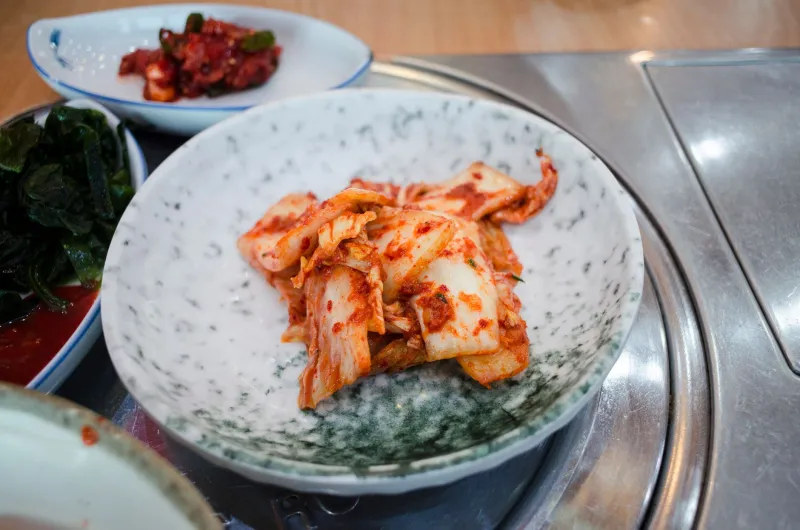
For a long time, the idea that a bowl of yogurt or a jar of kimchi could have anything to do with how you feel emotionally would have gotten you some serious side-eye at a dinner party. But that's changing — fast. Across university labs, wellness clinics, and farmers markets from Portland to Pensacola, a quiet revolution is underway. Researchers, nutritionists, and everyday Americans are starting to connect the dots between what lives in your gut and what's happening in your head.
Welcome to the gut-brain axis — one of the most fascinating and frankly mind-bending areas of modern science.
What Even Is the Gut-Brain Axis?
Here's the short version: your gut and your brain are in constant communication. They're linked by a sprawling network called the vagus nerve, plus a whole cascade of hormones and neurotransmitters that travel back and forth like a very busy two-way street. Your gut, in fact, produces roughly 90% of the body's serotonin — yeah, that serotonin, the one most people associate with antidepressants and feeling good.
The trillions of microorganisms living in your digestive tract — collectively called the gut microbiome — play a surprisingly active role in this conversation. They influence the production of mood-regulating chemicals, modulate inflammation, and even affect how your body responds to stress. When that microbial community is thriving and diverse, the signals being sent upstairs tend to be a lot more stable. When it's disrupted — by poor diet, antibiotics, chronic stress — things can get noisy in ways that show up as anxiety, brain fog, or low mood.
Dr. Emeran Mayer, a gastroenterologist and neuroscientist at UCLA who has spent decades studying this connection, has described the gut as a kind of "second brain." And increasingly, researchers are taking that metaphor seriously.
Where Fermented Foods Come In
So what does any of this have to do with your sourdough starter or that bottle of kombucha in your fridge? Quite a bit, it turns out.
Fermented foods are rich in live cultures — the beneficial bacteria and yeasts that result from lacto-fermentation and other traditional preservation methods. When you eat kimchi, kefir, miso, tempeh, sauerkraut, or traditionally made pickles, you're introducing a wave of microbial reinforcements into your digestive system. The idea is that these living additions can help restore balance to a microbiome that's been thrown off by modern life.
A landmark 2021 study out of Stanford University found that a diet high in fermented foods increased microbiome diversity and reduced markers of inflammation — two outcomes closely linked to better mental health outcomes. Participants who leaned into fermented foods showed measurable changes in their microbial communities within just ten weeks. That's not a small thing.
Nutritionist and functional medicine practitioner Maya Hendricks, who works with clients in the Chicago area, says she's seen this play out in her practice in real time. "I started incorporating fermented food recommendations into my mental wellness protocols about four years ago," she says. "What I notice is that clients who are consistent with things like kefir or fermented vegetables often report feeling more emotionally even — less reactive, better sleep, clearer thinking. Is it a cure-all? No. But it's a meaningful piece of the puzzle."
America's Shifting Wellness Mindset
What's particularly interesting is how this conversation is evolving culturally. For years, fermented foods were marketed almost exclusively around digestive health — bloating, gut comfort, regularity. Then came the probiotic boom, which pushed the narrative toward immunity. Now, something more nuanced is happening.
American consumers — especially millennials and Gen Z — are increasingly thinking about mental health through a holistic, whole-body lens. The pandemic accelerated a lot of this. When traditional mental health resources were stretched thin and people were stuck at home with their sourdough starters and homemade kombucha, many began noticing unexpected mood benefits from the foods they were making and eating.
Google search data shows a sustained uptick in queries combining terms like "gut health" and "anxiety" or "fermented foods" and "depression" over the past three years. Wellness apps are adding microbiome tracking features. And therapists are increasingly collaborating with dietitians in what's being called "nutritional psychiatry" — a field that takes seriously the idea that what you eat affects how you feel mentally, not just physically.
Dr. Uma Naidoo, a Harvard-trained nutritional psychiatrist and author of This Is Your Brain on Food, has become one of the most visible voices in this space. She frequently highlights fermented foods as part of a brain-healthy diet, pointing to their anti-inflammatory properties and their potential to support the microbial ecosystem that underpins emotional regulation.
The Fermentation-as-Practice Angle
There's another layer here that doesn't always make it into the scientific literature but feels very real to people who ferment at home: the process itself can be grounding.
Making fermented foods requires patience, observation, and a kind of attentiveness to living things. You're tending to something. You're watching it change. A lot of home fermenters describe the practice as meditative — a tactile, analog counterpoint to the noise of digital life. Whether that's kneading cabbage for sauerkraut, monitoring the pH of a sourdough starter, or watching the bubbles rise in a jar of water kefir, there's something genuinely calming about it.
This is the kind of thing that's hard to quantify in a randomized controlled trial, but it matters. Mental wellness isn't just about neurotransmitters — it's about ritual, agency, and connection. Fermentation, at its core, is all three.
What to Realistically Expect
Let's be clear about something: fermented foods are not a replacement for therapy, medication, or professional mental health support. The science, while genuinely exciting, is still young. Most studies are observational or conducted on small sample sizes. The specific mechanisms by which gut bacteria influence mood are still being mapped. And individual microbiomes vary enormously — what works wonders for one person's mental clarity might be a total non-event for someone else.
But here's what we can say with reasonable confidence: a diverse, fiber-rich diet that includes regularly fermented foods is associated with a healthier gut microbiome, and a healthier gut microbiome is associated with better outcomes across a range of mental health markers. That's not nothing. That's actually kind of a big deal.
And for a country where nearly one in five adults lives with a mental health condition — and where the demand for accessible, integrative wellness strategies has never been higher — it's a conversation worth having.
Getting Started Without Overthinking It
If you're curious about exploring this for yourself, you don't need to overhaul your entire diet overnight. Start simple. Add a daily serving of something fermented — plain kefir stirred into a smoothie, a side of kimchi with dinner, a tablespoon of miso dissolved into broth. Give it a few weeks. Pay attention to how you feel — your energy, your sleep, your baseline mood.
And if you want to go deeper, try making something yourself. There's a reason so many people who start fermenting at home describe it as a practice, not just a hobby. It connects you to something ancient, something alive, something that asks you to slow down and pay attention.
Your gut has been trying to talk to your brain this whole time. Fermentation might just be the best way to help them understand each other.